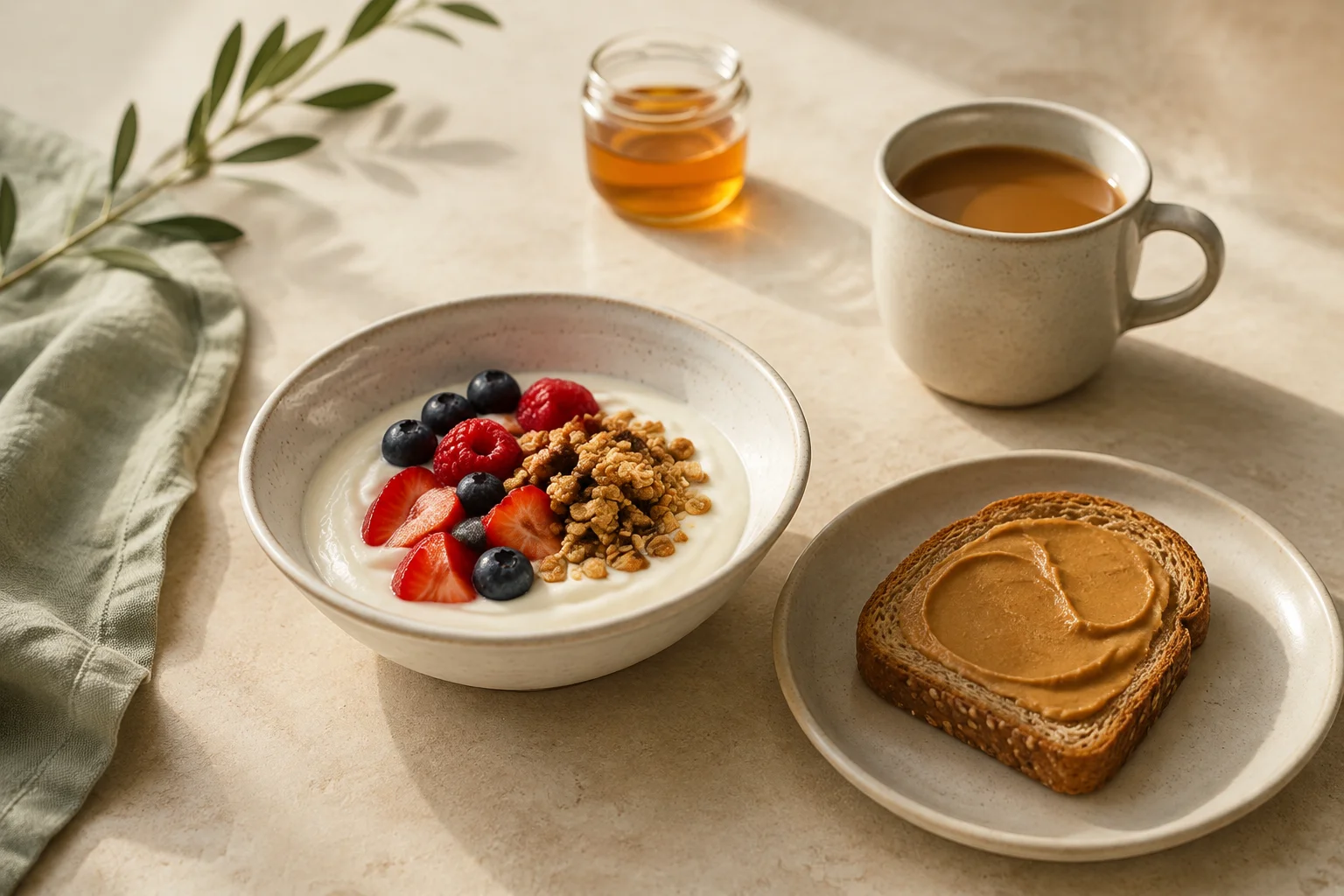
Most people do not wake up and eat cake for breakfast. Added sugar is more likely to arrive through things that feel normal: a flavored coffee, a fruit yogurt, a bowl of cereal, a granola bar in the car, or a bottled smoothie picked up on the way to work.
None of those choices makes you irresponsible. And fruit, milk, and plain yogurt all contain naturally occurring sugars; those are not what the “added sugars” line on a U.S. Nutrition Facts label means. The useful thing to notice is the sugar added during processing or preparation — especially when several sweet items become your default morning.
Why breakfast sugar can be easy to miss
Breakfast happens fast. You are often choosing while tired, commuting, packing lunches, or answering messages. The food and drink are sold as energy, protein, fruit, or a well-earned treat. Each may seem modest. The issue is not that any one of them is forbidden; it is that a sweet coffee plus flavored yogurt plus granola can become a lot of added sugar before lunch without ever tasting like an obvious dessert.
After 40, this is worth noticing not because your body suddenly cannot handle a sweet breakfast, but because the habits you repeat tend to matter more than the occasional choice. A clearer view can help you choose where sweetness is actually worth it to you.
Four usual suspects
1. Coffee drinks and bottled coffee
Coffee itself is not the concern. Syrups, sweetened creamers, flavored cold foam, and bottled coffee drinks can turn it into the sweetest part of breakfast. If you love a flavored drink, you do not have to give it up. Consider choosing a smaller size, fewer pumps of syrup, or plain coffee on the days you would rather spend your sweetness somewhere else.
2. Flavored yogurt
Yogurt can be a practical breakfast base, but the fruit-on-the-bottom or dessert-style versions can vary a lot in added sugar. Compare the label with plain yogurt, then add berries, banana, cinnamon, nuts, or a spoonful of the topping you actually enjoy. You still get a sweet breakfast; you just get to decide how sweet.
3. Cereal, granola, and “healthy” breakfast bars
Words such as whole grain, protein, organic, or made with fruit do not tell you the added-sugar amount. Some options are modest; some are closer to a sweet snack. The serving size matters too, especially for granola. Use the label to compare the products you already buy, not to search for a perfect food.
4. Smoothies and juice drinks
A smoothie can include fruit, yogurt, oats, nut butter, and other useful ingredients. It can also be built around juice, sweetened bases, and large portions. A quick question helps: does this drink have something filling in it, or is it mostly a sweet beverage with a healthy halo?
Try the “one sweet thing” rule
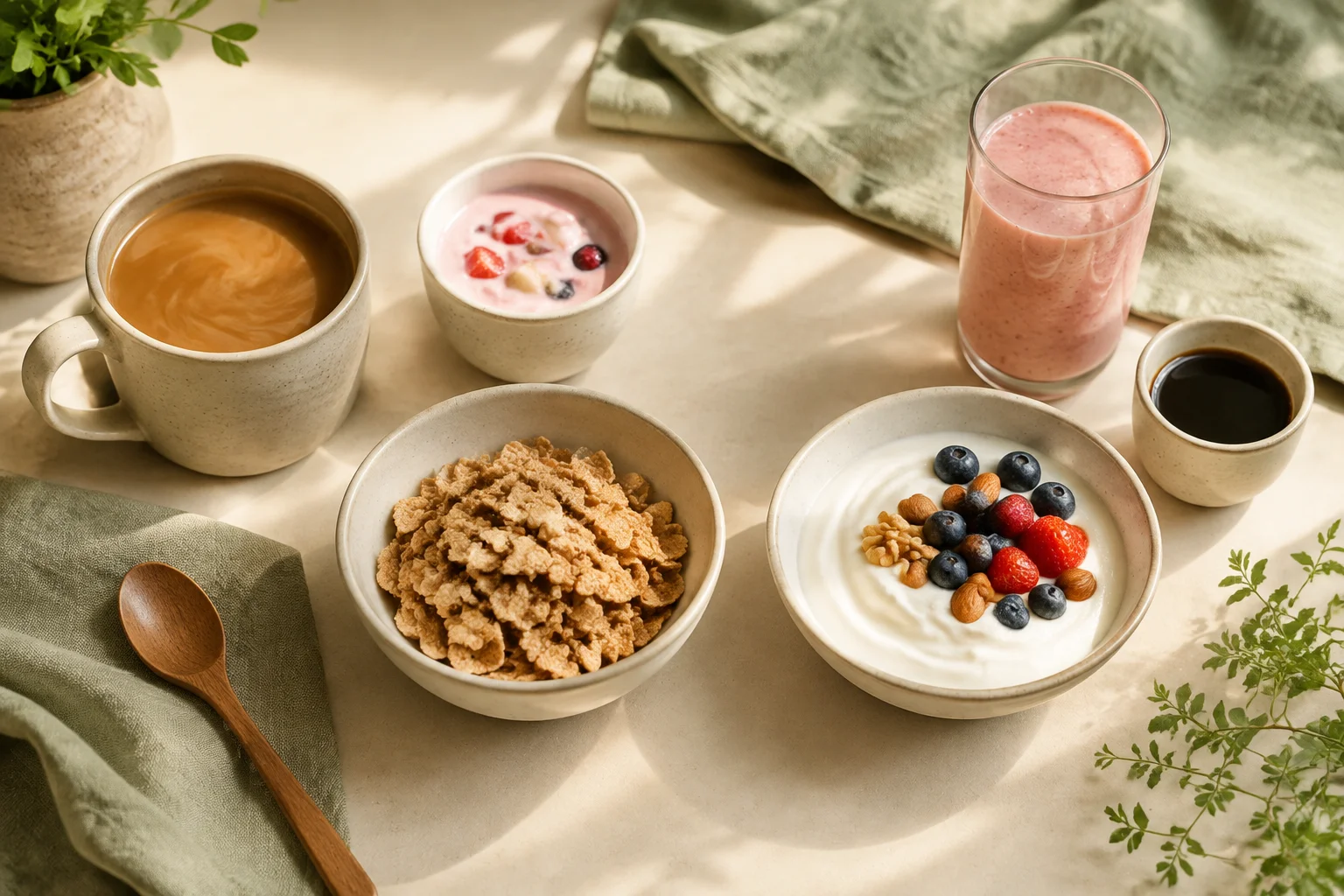
This is not a medical rule. It is a useful experiment for a normal weekday: choose one sweet element that you genuinely enjoy, then let the rest of breakfast stay simple.
Love a sweet coffee? Pair it with plain yogurt and fruit, eggs and toast, or another less-sweet breakfast.
Love flavored yogurt? Keep it, and make coffee or tea less sweet that day.
Want cereal? Add nuts, plain yogurt, or eggs rather than making a sweet drink the second main item.
Need something fast? Pick the packaged item that works, then add fruit or unsalted nuts instead of trying to start over tomorrow.
The point is not to make breakfast perfect. It is to avoid accidentally stacking three or four sweet defaults when one would have been plenty.
What to look for on the label
Start with the serving size, then find “Includes Added Sugars” under Total Carbohydrate. Compare like with like: two yogurts, two cereals, or two coffee drinks. You do not need to memorize a number for every food. You only need to recognize the versions that would be easy to eat often.
For a breakfast foundation that does not require much calculation, see three flexible breakfast formulas. For the bigger picture behind MidAgeDiet, read the four nutrition numbers we watch beyond calories.
A CALMER FOOD PICTURE
Notice what your ordinary meals add up to.
MidAgeDiet is being built to make added sugar, sodium, saturated fat, and cholesterol easier to see — without turning food into a spreadsheet.
- Log meals by photo or simple text
- Track four food signals beyond calories
- Spot patterns over days and weeks