
For a lot of people, cholesterol becomes real after a routine blood test. Suddenly an ordinary breakfast egg, a piece of cheese, or a weekend steak feels like it needs an explanation. But one food rarely tells the full story of a lab result — and removing one food is rarely the only useful move.
Cholesterol levels can be influenced by genetics, age, activity, sleep, certain health conditions, medications, and overall eating patterns. That is why personal medical guidance matters. For everyday food decisions, though, it helps to zoom out from one plate and look at the week you are actually living.
Why the egg gets all the attention
Eggs contain dietary cholesterol, so they are easy to point to. But food and blood cholesterol do not have a simple one-to-one relationship for every person. The American Heart Association notes that the overall dietary pattern matters, especially the mix of saturated fat, fiber-rich foods, and the foods that routinely replace each other on your plate.
That does not mean every person should make the same choice. If your clinician has given you a specific plan after looking at your results and medical history, follow that plan. The point here is simply to avoid turning one familiar food into the entire story.
Look for the combinations that repeat
Breakfast: what comes with the eggs?
Eggs with vegetables, beans, fruit, or whole-grain toast tell a different weekly story than eggs with bacon, sausage, buttered toast, and cheese most mornings. Both can be enjoyable meals. The distinction is frequency and what becomes automatic around the main item.
Lunch: the convenience stack
A sandwich is not just the protein in the middle. Deli meat, cheese, creamy spreads, chips, and a sweet drink can turn one quick lunch into several repeatable signals at once. You do not have to rebuild it; changing one layer is still a change.
Dinner: richness without balance
Rich dinners are part of life. The more useful thing to notice is whether vegetables, beans, lentils, fruit, oats, or other fiber-rich foods show up often enough around them. Fiber is not a punishment food; it is part of what makes a meal satisfying and gives the week more variety.
Three realistic things to try this week
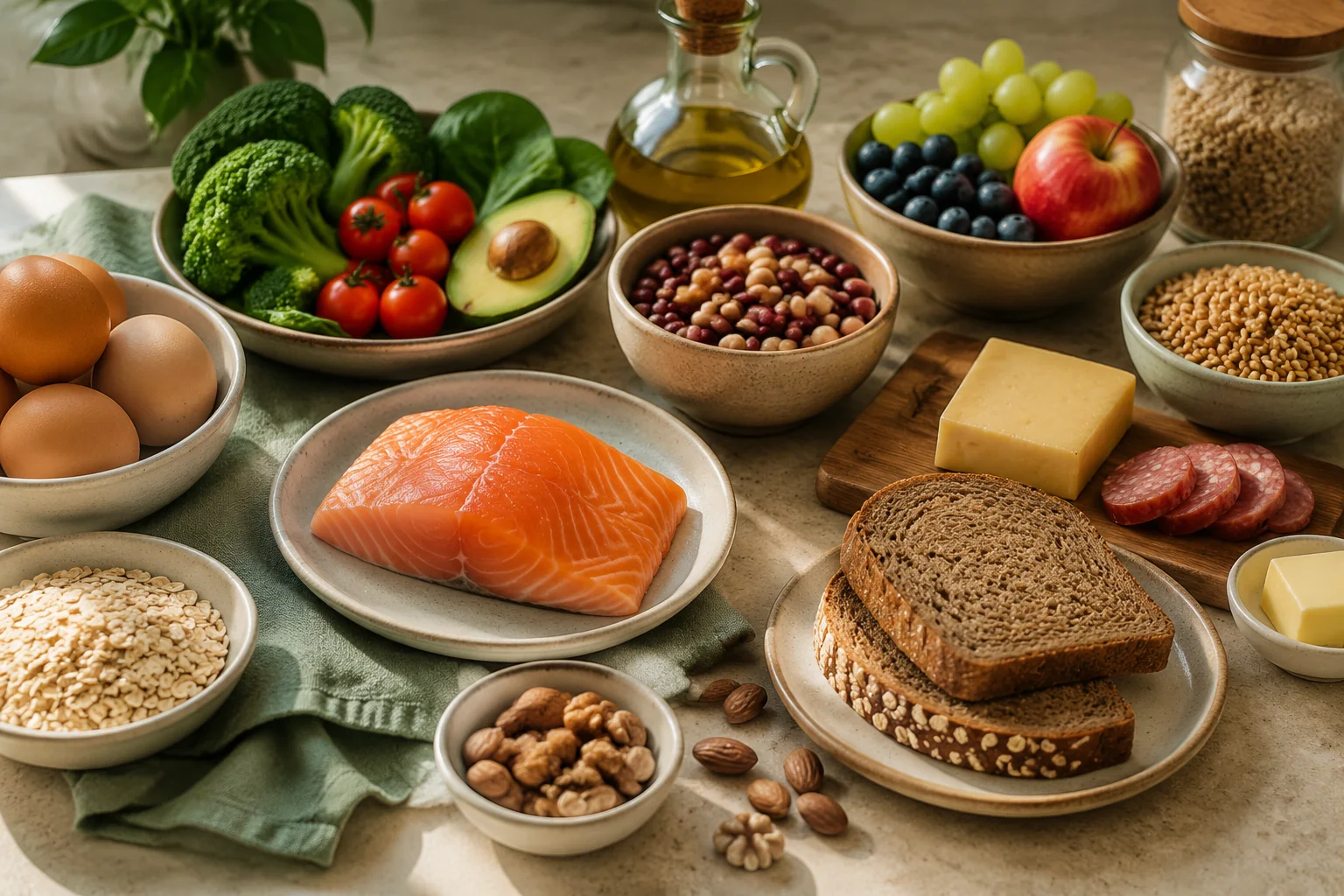
Keep the egg, change the supporting cast. Add vegetables or beans; make bacon or sausage the occasional part, not the automatic part.
Add one fiber anchor a day. Oats, beans, lentils, fruit, vegetables, and whole grains are ordinary places to start. Pick the one you will actually eat.
Make one rich layer intentional. Choose the cheese, the creamy sauce, or the buttery side — not necessarily all of them in the same routine meal.
These are not promises about a future blood test. They are small ways to make the overall pattern easier to work with, without treating food like a courtroom.
Your lab result is information, not a verdict
Seeing a number change can feel personal, especially when you thought you were doing a lot right. But it is useful information, not a moral score. A healthcare professional can help you understand what your specific numbers mean in context. Your everyday role is simpler: learn which meals repeat, then decide where a realistic adjustment belongs.
For another pattern that often travels alongside cholesterol concerns, read the rich extras that make saturated fat add up. For the broader MidAgeDiet approach, see the four nutrition numbers we watch beyond calories.
A CALMER FOOD PICTURE
Notice what your ordinary meals add up to.
MidAgeDiet is being built to make added sugar, sodium, saturated fat, and cholesterol easier to see — without turning food into a spreadsheet.
- Log meals by photo or simple text
- Track four food signals beyond calories
- Spot patterns over days and weeks