By lunchtime, most people are not looking for a nutrition lecture. They are looking for something fast, satisfying, and easy to eat between everything else. That is why a useful lunch strategy after 40 cannot depend on cooking from scratch every day or finding the one “clean” menu item.
Instead, use a few questions that work almost anywhere: at a deli counter, a drive-through, a work cafeteria, a grocery store, or your own refrigerator. They help you notice the parts of a meal that tend to repeat — without making one lunch into a verdict.
Why lunch deserves its own strategy
Lunch is often where convenience wins. A desk day turns into a sandwich, a drive-through order, a frozen bowl, or whatever is closest to the office. There is nothing wrong with convenience. But because lunch is so repeatable, it is also one of the easiest places for a few small changes to become a genuine habit.
For adults over 40, the aim is not to chase a smaller lunch. It is to build a lunch that is satisfying enough to prevent the afternoon “I need something now” feeling, while keeping an eye on the usual sources of added sugar, sodium, saturated fat, and cholesterol.
1. What will make this feel like a meal?
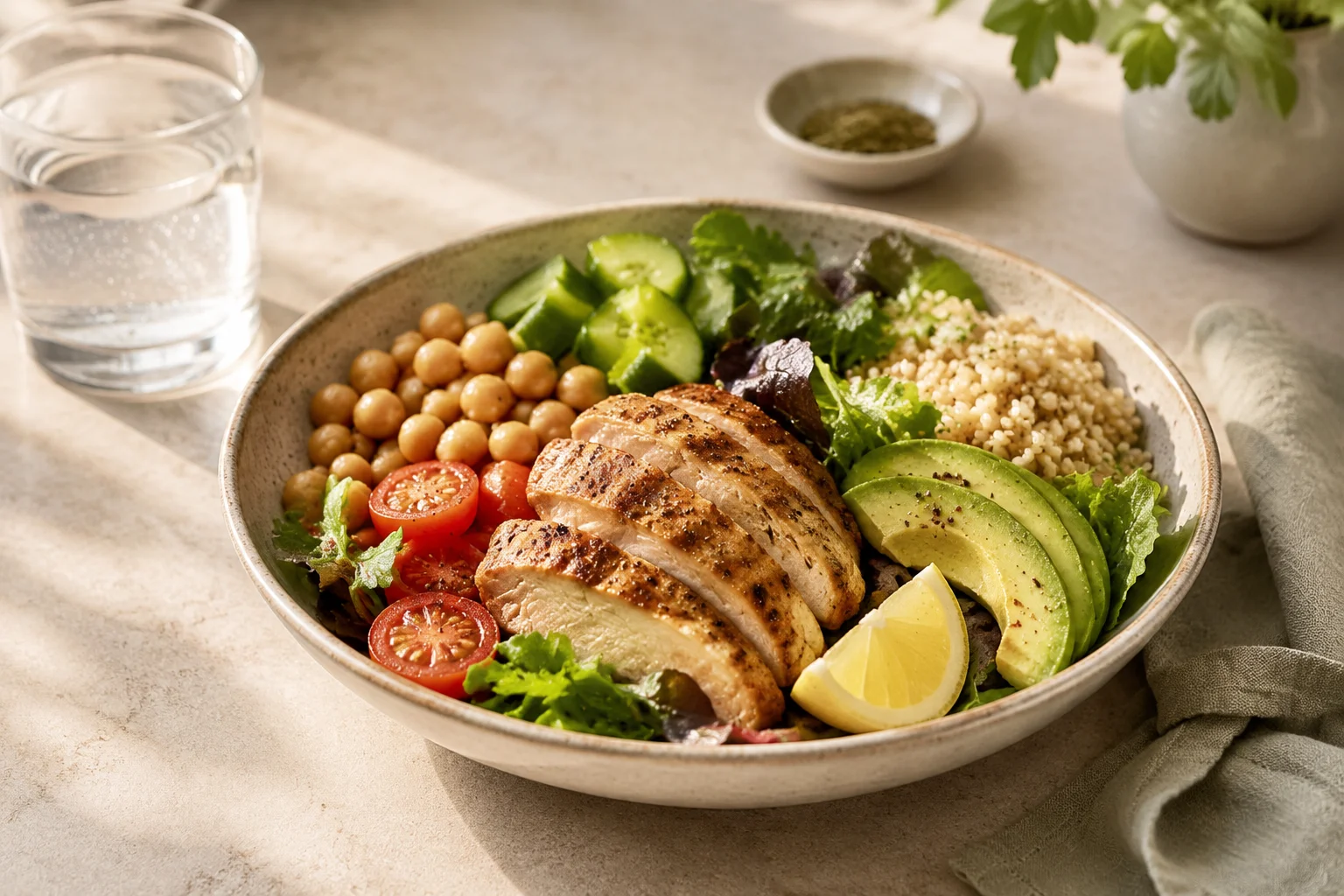
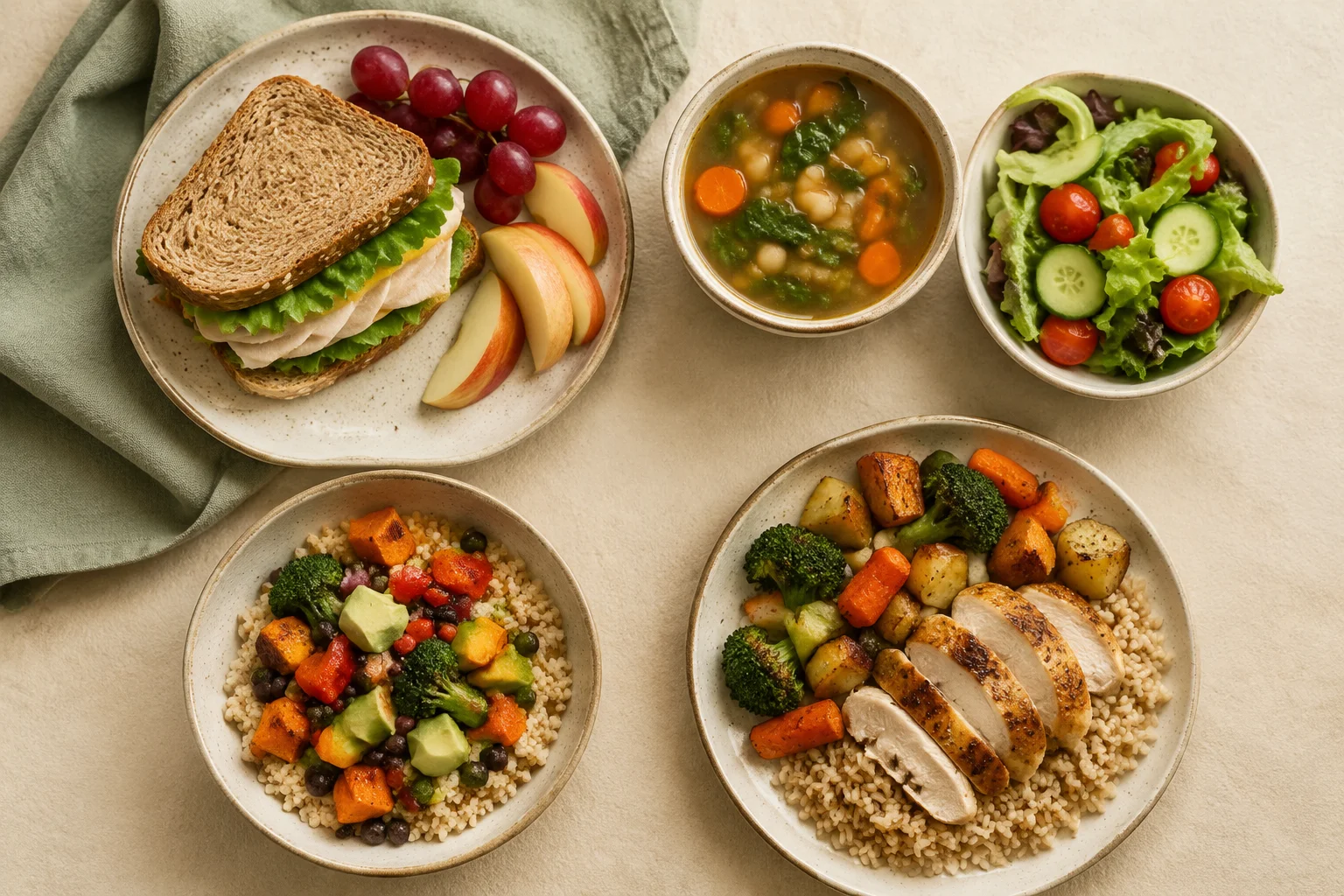
A quick lunch does not need to be huge, but it helps to have a real base: a protein you enjoy, something with fiber or produce, and enough food to carry you through the afternoon. That might be a grain bowl with beans, a sandwich with fruit, leftover chicken and vegetables, soup plus a salad, or yogurt with nuts and a piece of fruit when your appetite is small.
This is not a macro target. It is a practical question: will this leave me looking for chips, candy, or a second coffee in an hour because lunch was mostly a drink, pastry, or snack?
2. What is doing most of the flavor work?
Fast lunches often get their flavor from a few concentrated ingredients: deli meat, cheese, sauce, dressing, a seasoning packet, a sweet drink, or a dessert-like snack. You do not have to remove them. But it is useful to spot which one is carrying the meal, because that is usually the easiest place to make a choice on purpose.
For example, if the sandwich already has deli turkey and cheese, sauce on the side may be enough. If a salad has a rich dressing, crispy toppings, and cheese, you may not need all three. If lunch is a sweet coffee and a pastry, adding something more substantial can be more helpful than promising yourself you will have more willpower later.
3. What is one easy thing I can add or adjust?
Do not rebuild the order. Look for one move with almost no friction. Add fruit to the sandwich. Ask for dressing or sauce on the side. Choose water or unsweetened tea most days. Swap a salty side for something fresh. Add beans or vegetables to a frozen bowl. Keep the thing you actually wanted, then make one companion choice that helps the whole meal feel more balanced.
The smallest useful change is not always the same. For some people it is more produce. For others it is seeing how much sodium is in a favorite prepared lunch, or noticing added sugar in the drink that comes with it. The point is to find a change you could still make on a busy Wednesday.
Four quick lunches that do not need a makeover
The pattern matters more than the perfect order
There will be days when lunch is a cookie and coffee in the car, or pizza at a work meeting, or a restaurant meal you simply wanted. Food does not become a moral issue because the day got busy. A quick lunch strategy is useful because it gives you options on ordinary days, not because it eliminates every imperfect one.
If quick lunches are usually sandwiches, start with where sodium can add up in a turkey sandwich. For the broader framework behind MidAgeDiet, read the four nutrition numbers we watch beyond calories.
A CALMER FOOD PICTURE
See what your ordinary meals add up to.
MidAgeDiet is being built to help adults notice patterns without turning food into a spreadsheet.
- Log meals by photo or simple text
- Track four food signals beyond calories
- Spot patterns over days and weeks