
For a long time, healthy eating can sound like a body project: get leaner, look more defined, undo a weekend, earn a meal. After 40, those goals may still be present. But they are no longer the whole picture. A more useful priority is choosing habits that are easier on your body to carry, day after day.
That is not an argument for giving up on strength, confidence, or clothes that feel good. It is a shift in what leads the decision. Instead of asking whether a meal helps you look a certain way by next month, ask whether the pattern around it supports steady energy, heart health, digestion, sleep, strength, and the freedom to keep doing what you enjoy.
The physique-first mindset has a blind spot
A food plan can look disciplined and still be hard on the person following it. Skipping meals until you are ravenous, cycling through strict rules and rebound eating, treating vegetables as optional, relying on processed convenience foods because their calories fit, or using alcohol as the regular way to unwind can all become invisible when appearance is the only scorecard.
None of those habits makes someone a failure, and no single dinner is a health event. The question is what repeats. A routine can be low in calories and still be low in fiber. It can be high in protein and still lean heavily on sodium or saturated fat. It can look "clean" online while leaving you tired, preoccupied with food, or without enough variety to sustain it.
What does less strain look like in real life?
It usually looks much less dramatic than a transformation plan. It is the sandwich with more filling and fewer salty layers. It is cooking with oil you enjoy instead of making every meal rich by default. It is eating enough at lunch that the late-afternoon snack does not become an emergency. It is choosing water or a nonalcoholic drink on ordinary nights because alcohol is no longer the automatic transition out of the day.
These choices do not guarantee a particular lab result or body shape. They make the weekly pattern more supportive, and they give you more room for the meals that are about celebration, travel, or simply enjoying what is in front of you.
Four priorities that age better than a body goal
Variety over control
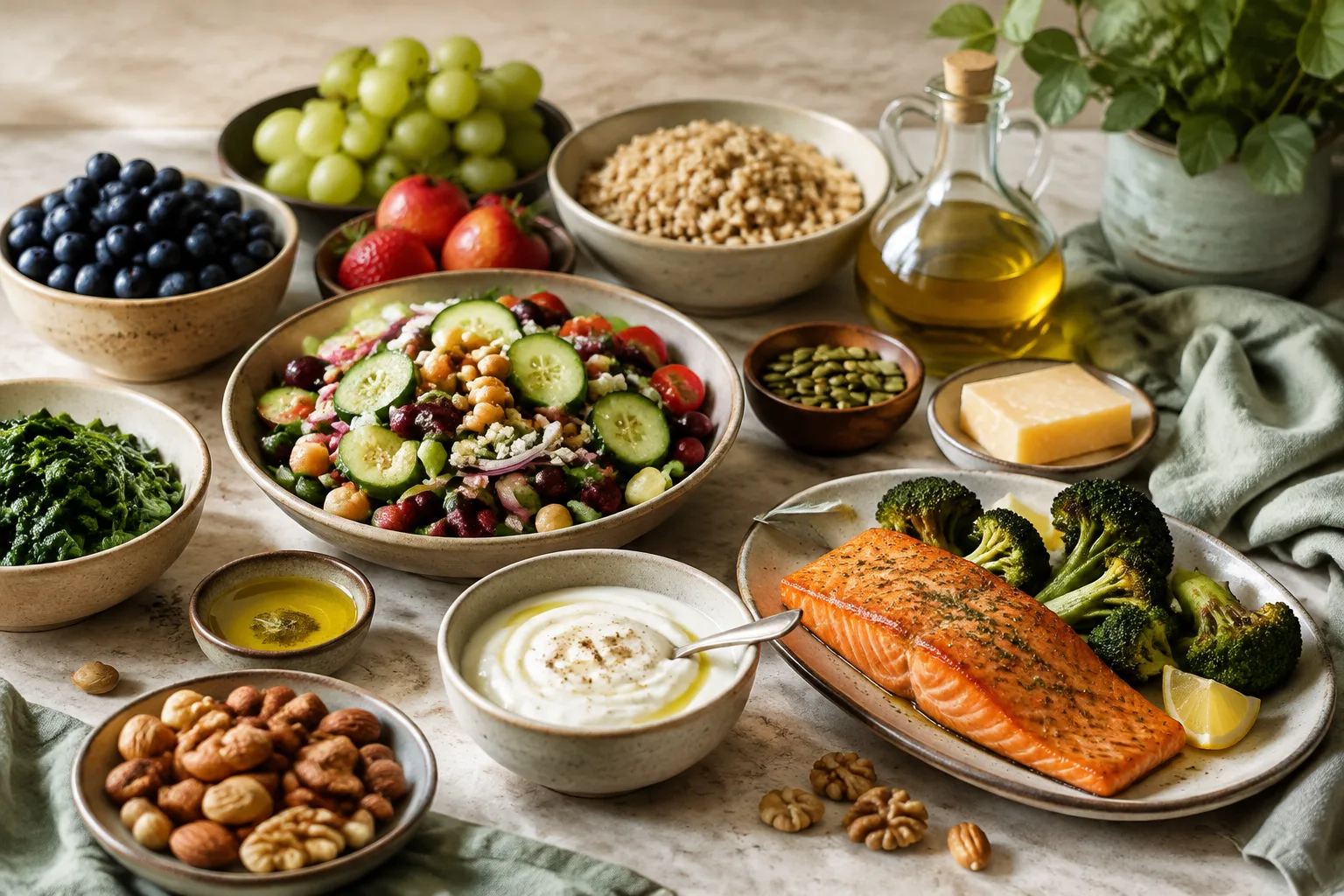
Meals with vegetables or fruit, beans, whole grains, nuts, fish or other proteins, and foods you genuinely enjoy tend to give you more than a narrow rotation designed only around macros.
Steady meals over compensation
There is no need to "make up" for dinner by skipping breakfast. A steady pattern makes hunger and decisions easier to manage than a cycle of restriction and overeating.
Useful swaps over hard rules
Keep the meal you like and change the part that adds up: the salty sauce, the second rich topping, the sweet drink, or the automatic processed side.
Health information over self-judgment
Blood pressure, cholesterol, glucose, sleep, energy, and strength offer more useful feedback than a mirror alone. Discuss your individual risk and targets with a qualified clinician.
The food signals worth noticing
You do not need to inspect every bite. It helps to notice a few patterns that can become concentrated in ordinary meals: added sugar from drinks and packaged snacks; sodium from restaurant food, soups, deli meat, and sauces; saturated fat from rich extras that show up together; and long gaps without fiber-rich foods such as vegetables, fruit, beans, oats, or whole grains.
MidAgeDiet focuses on these signals because they are often easier to act on than a vague instruction to "eat better." You might keep your favorite breakfast and add fruit. You might keep the takeout and choose one less-salty side. You might make cheese the intentional rich part of a meal instead of adding cheese, butter, creamy sauce, and processed meat together. The best adjustment is usually the one that does not make you resent your own lunch.
Start by removing pressure, not pleasure
Choose one reliable meal. Make it satisfying enough to repeat: a protein you like, a plant food, and a filling carbohydrate such as beans, oats, potatoes, or whole grains.
Notice the automatic extra. Is it a sugary drink, salty sauce, rich side, or second snack? Keep it when it matters and make it less automatic when it does not.
Put alcohol in the same honest picture. For many adults, the helpful change is fewer drinking occasions or smaller amounts, not a performance of perfection.
Use a checkup as context. If a number is elevated or you have a health condition, family history, or medication question, let personal medical guidance lead.
There is a quiet confidence in eating this way. You are not trying to prove discipline to anyone. You are building a pattern that leaves more capacity for work, family, movement, pleasure, and the years you want to be well enough to enjoy.
For a practical place to begin, look at the four nutrition numbers beyond calories. If cholesterol is the concern you are carrying right now, read why the weekly pattern matters more than one egg.
THE LONGER VIEW
See what your ordinary meals are really asking of you.
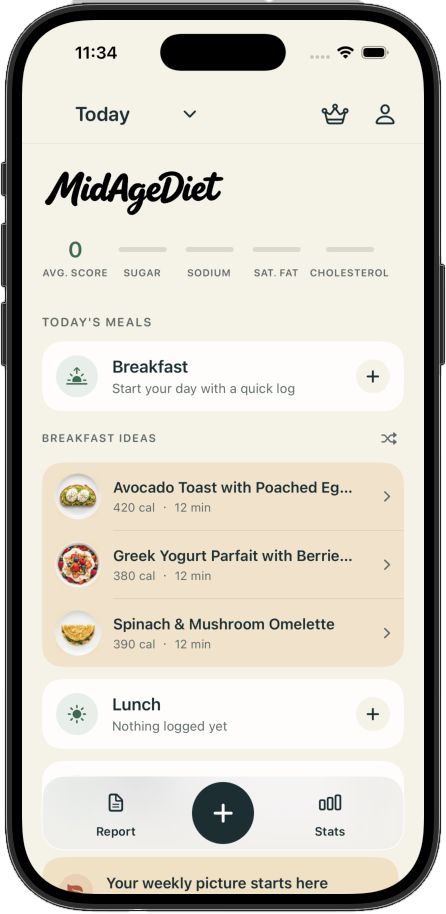
MidAgeDiet is being built to make added sugar, sodium, saturated fat, and cholesterol easier to notice without turning food into a body project.
- Log meals by photo or simple text
- Track four food signals beyond calories
- Spot patterns over days and weeks