The afternoon dip is common. Around three o’clock, concentration can soften, your body may feel heavier, and the idea of one more meeting becomes strangely difficult. It is easy to label the change as age. Sometimes that is part of the story, but your lunch pattern and the rest of your day may be giving you more useful clues.
This is not an argument that one meal can explain all fatigue. Sleep, stress, medications, illness, hormonal changes, activity, and work demands matter. The practical idea is simpler: if the slump repeats, observe what tends to happen before it instead of treating it as a personal failure.
Lunch can be “light” and still leave you empty
A salad with a little chicken may look virtuous but leave you searching for snacks by four. A pastry and coffee may be convenient but provide little staying power. A large, rich restaurant lunch may leave you sleepy and uncomfortable. None of these foods is forbidden. They simply create different conditions for the hours that follow.
After 40, many people are also juggling longer workdays, less consistent sleep, family responsibilities, and changes in activity. A lunch that worked when your schedule was different may no longer carry you as well. That is information, not a verdict.
What a steadier lunch usually includes
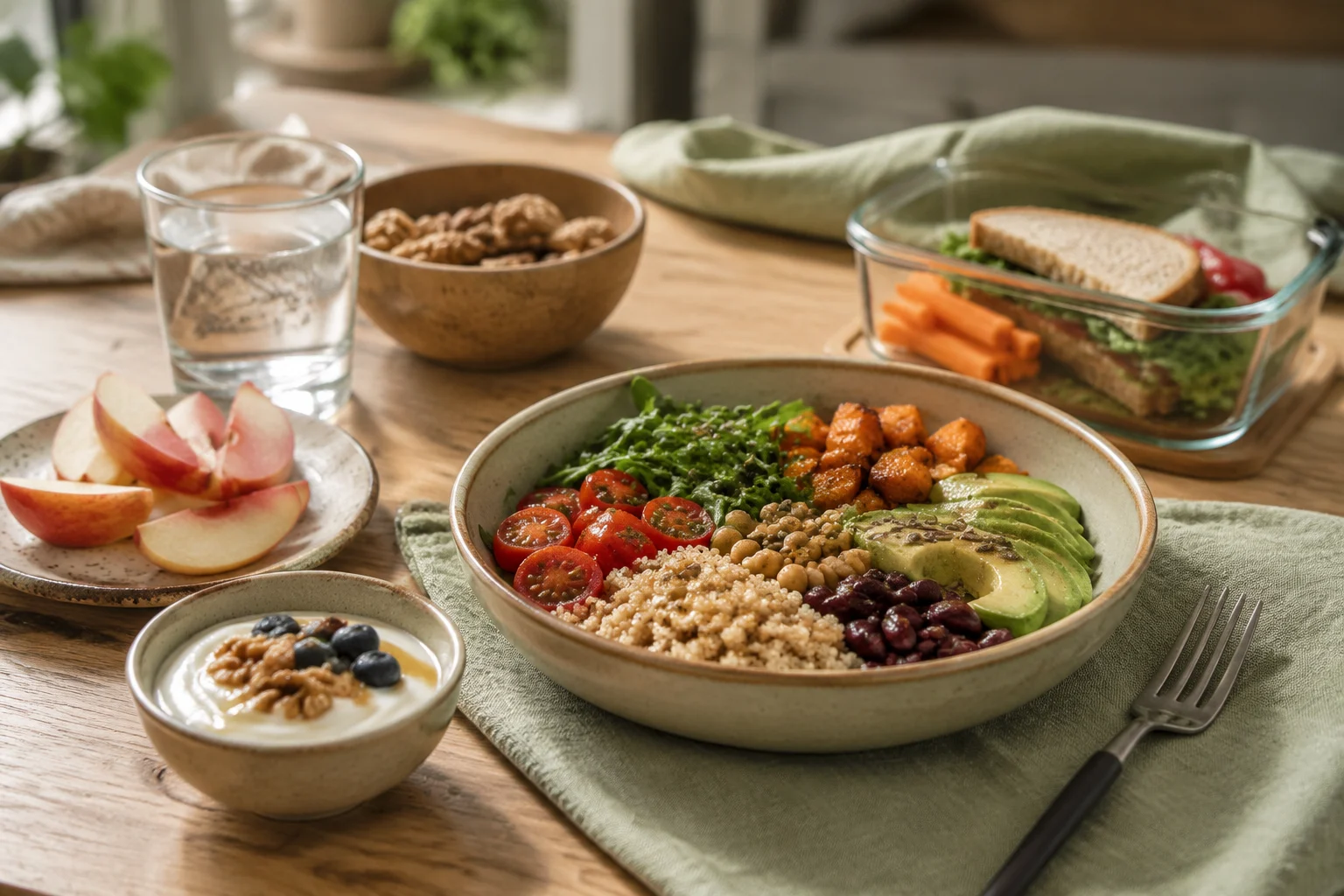
Think in components rather than a perfect menu: a protein source you enjoy, a fiber-rich plant food, a satisfying carbohydrate, and enough fluid. Beans with grains and vegetables, a turkey or tofu sandwich with fruit, leftovers with a side of greens, or yogurt with oats and nuts can all work. The best choice is the one you will actually eat and can repeat.
You do not need to remove every carbohydrate or make lunch enormous. A useful test is whether the meal keeps hunger and attention reasonably steady for the next few hours. If it does not, adjust one part: add beans, fruit, yogurt, whole grains, or another protein source before redesigning everything.
Four lunch patterns worth observing
The missing lunch
Meetings or errands push lunch late, then hunger arrives as a crash. Keep a simple backup such as yogurt, fruit, nuts, or a bean-based snack.
The quick sugar hit
A sweet drink, pastry, or refined snack may be easy to grab. Pair it with something more sustaining when possible, rather than turning it into a forbidden food.
The giant rich lunch
A heavy meal can feel satisfying and still make the afternoon uncomfortable. Try keeping the food you like while using a smaller rich extra or adding vegetables.
The low-fluid day
Mild dehydration can overlap with tiredness and poor concentration. Keep water visible and notice whether long stretches pass without drinking.
Do not blame lunch for a sleep problem
If you slept poorly, are under sustained stress, or are carrying more work than usual, lunch may only be exposing the problem. A balanced meal cannot replace enough sleep, and adding more caffeine can sometimes make the next night harder.
Look at the whole day: what time you slept, when you last moved, how much water you drank, whether you skipped meals, and what your stress level was. Patterns become more useful when you put them next to one another.
When fatigue deserves more than a food experiment
Do not assume persistent or worsening fatigue is dietary. If tiredness is new, severe, lasts for weeks, interferes with daily life, or comes with symptoms such as shortness of breath, chest pain, fainting, unexplained weight change, bleeding, fever, depressed mood, or major changes in sleep, contact a qualified healthcare professional. A clinician can decide whether evaluation or testing is appropriate.
A five-day lunch check
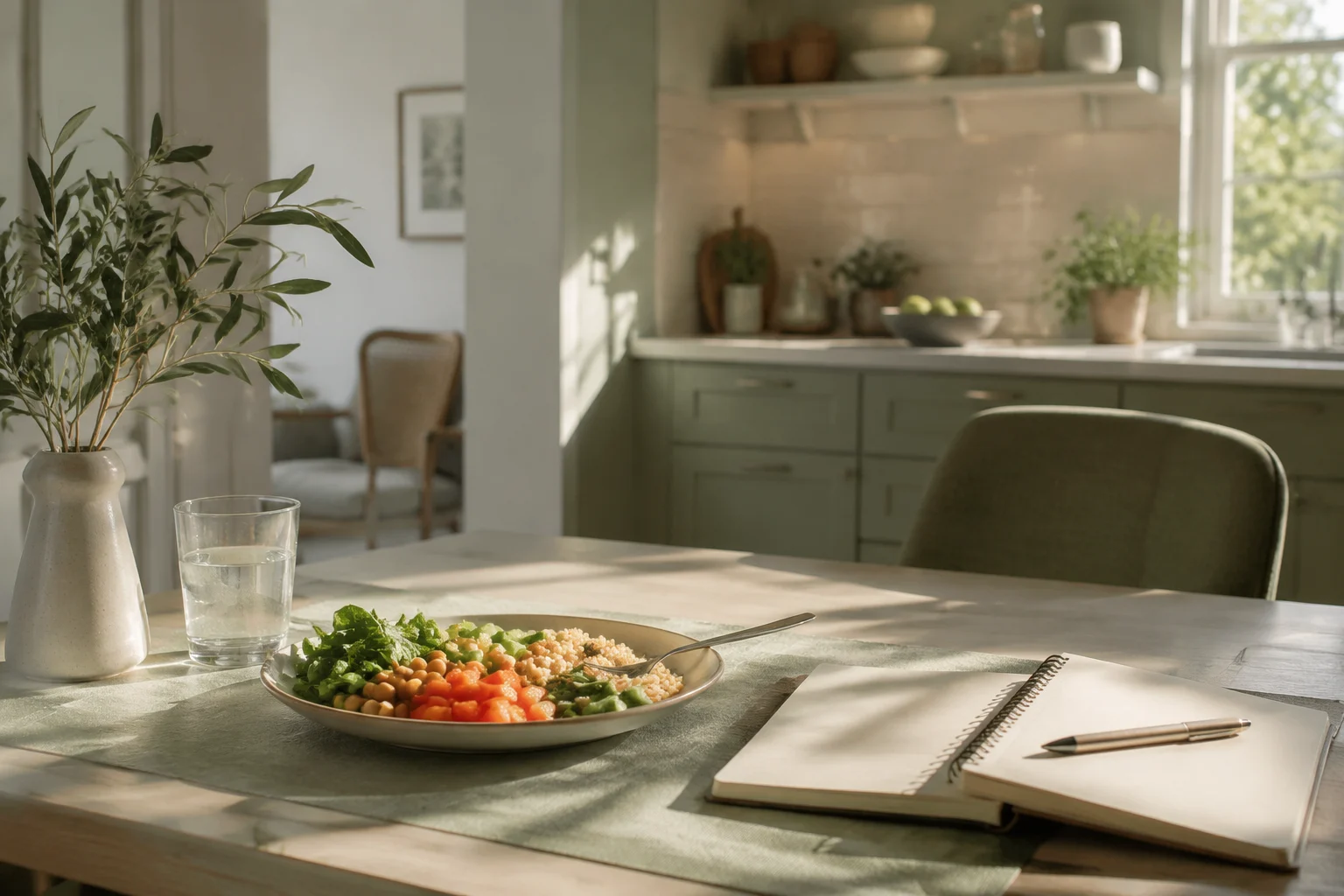
Write down lunch in plain language. Note the main protein, plant food, carbohydrate, and drink.
Rate your 3 p.m. energy. Use a simple 1–5 scale rather than a perfect measurement.
Notice sleep and stress. They are part of the pattern, not background noise.
Change one component. Add a fiber-rich food, include more protein, reduce a very rich extra, or drink water earlier.
The point is not to create a new rule about lunch. It is to learn whether one ordinary adjustment makes the afternoon more workable. If it does, keep it. If it does not, widen the view to sleep, stress, medication, health, and the rest of your routine.
For more practical pattern-spotting after 40, read why the healthiest meal may be the one you can repeat and how to return to routine after a big weekend without punishment.
THE LONGER VIEW
Make the afternoon pattern easier to see.
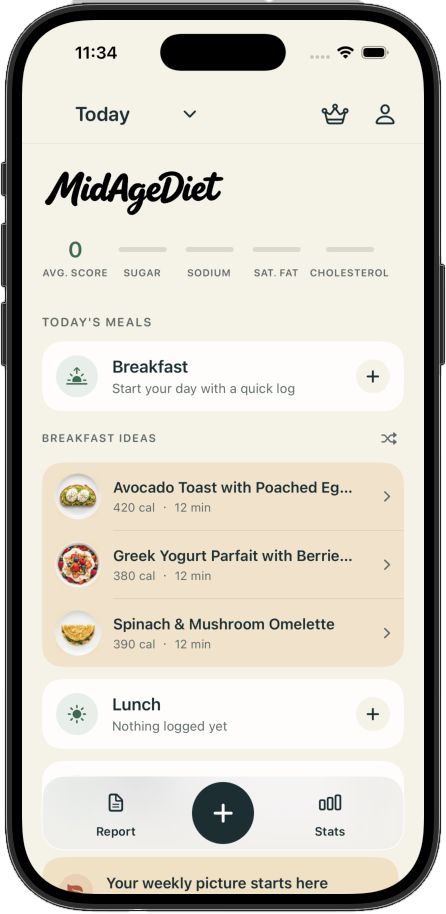
MidAgeDiet is being built to help you connect everyday meals with the energy, hunger, and routines around them — without turning one tired afternoon into a diagnosis.
- Log meals by photo or simple text
- Track four food signals beyond calories
- Spot patterns over days and weeks