There is a version of healthy eating that looks impressive from a distance: elaborate recipes, exact portions, a refrigerator full of carefully measured ingredients. It can work for a while. But after 40, the more useful question is often quieter: Can I make and enjoy this meal often enough for it to matter?
That question is not an excuse to stop caring about nutrition. It is a way to make nutrition more realistic. A meal that contains food you like, enough protein and fiber to satisfy you, and a few ingredients you can keep on hand may do more for your weekly pattern than a “perfect” meal you make once and abandon.
Optimization can hide the real cost
When food becomes another performance project, the obvious numbers can crowd out the useful ones. You may hit a calorie or protein target while spending too much time thinking about food, skipping meals to “make room,” or depending on packaged foods because they are easy to track.
None of those choices makes you careless. They are clues that the plan may be asking for more effort than your life can spare. Stress, poor sleep, a long commute, caring for family, and changing work demands all affect what a sustainable meal needs to look like.
What makes a meal worth repeating?
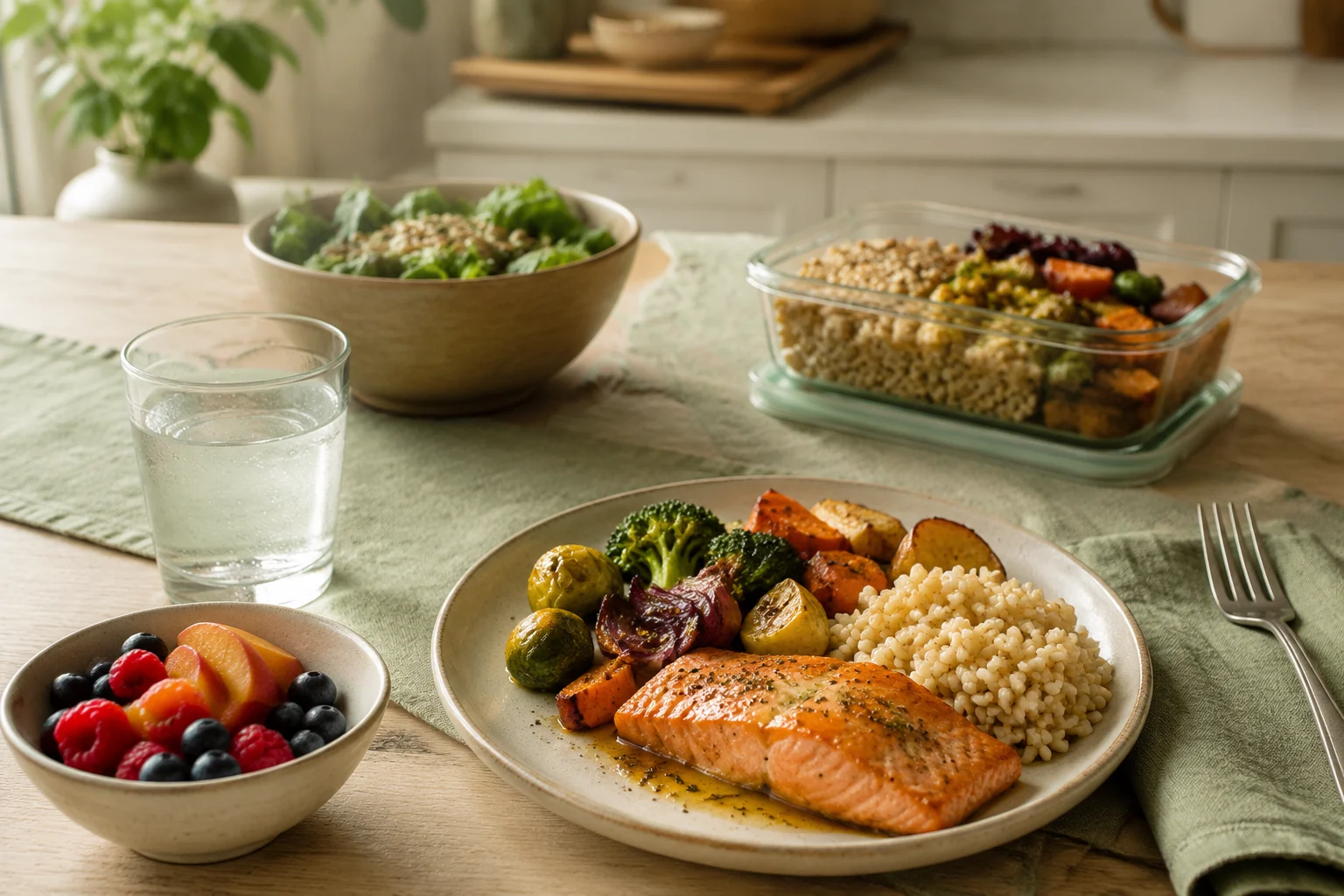
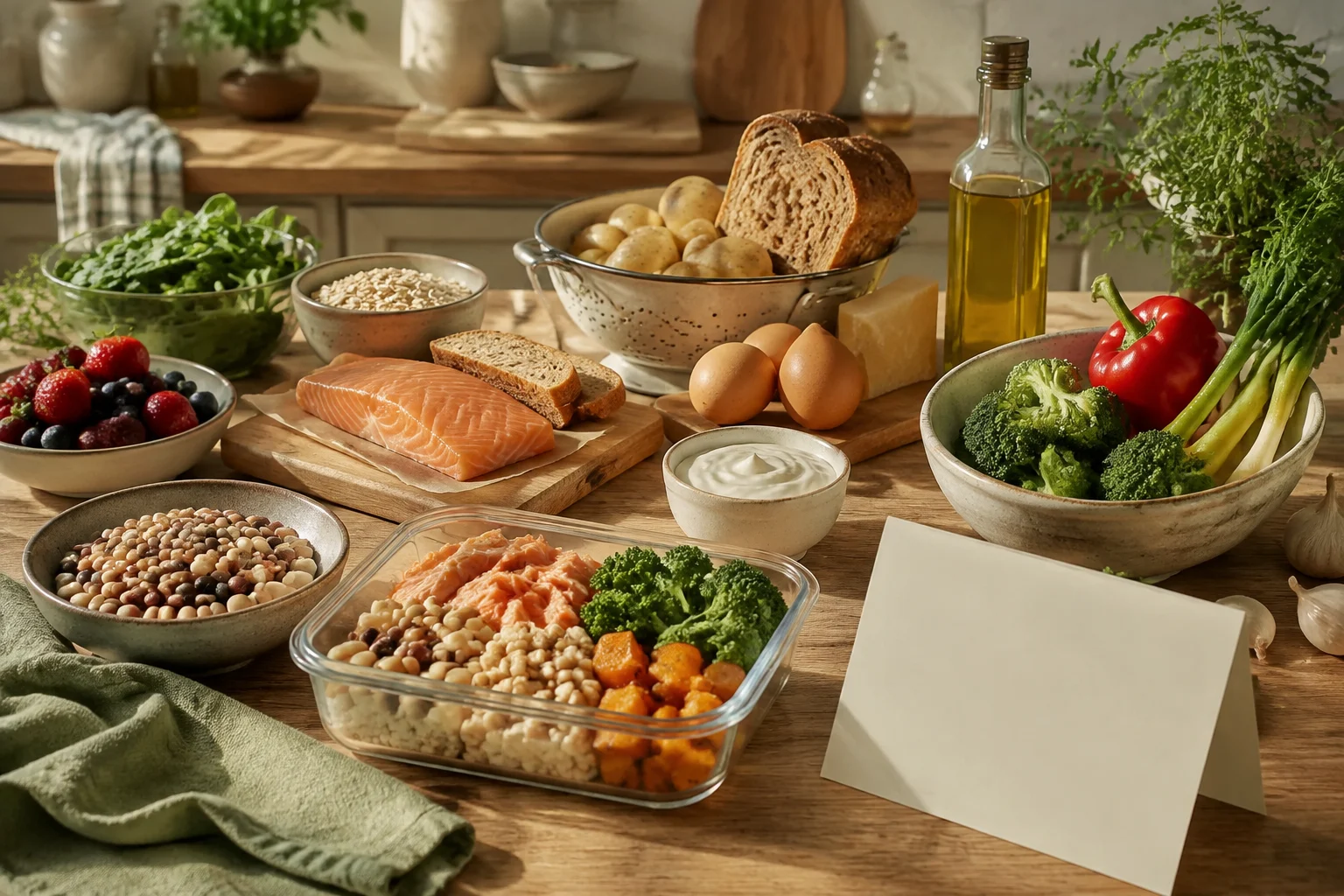
A repeatable meal has a simple structure, but it does not have to be boring. Start with a protein you enjoy, add a plant food, include a satisfying carbohydrate, and use a flavor you genuinely want to taste. That could be salmon with beans and greens, yogurt with oats and fruit, eggs with vegetables and whole-grain toast, or a supermarket rotisserie chicken turned into two different lunches.
The point is not to memorize a formula. The point is to make the next decision easier. If the ingredients are familiar and the meal leaves you comfortably full, you are less likely to arrive at the afternoon or evening ready to eat whatever requires the least thought.
Four tests for a lower-strain meal
Will it satisfy me?
A meal that leaves you hungry twenty minutes later may look “light,” but it can make the rest of the day harder. Include enough food, especially protein, fiber, and a carbohydrate you enjoy.
Can I make it on a tired day?
If it requires a special shopping trip and a quiet hour, it may belong in your weekend rotation. Have a simpler version for the nights when energy is limited.
What is doing the most work?
Notice the sauce, drink, processed topping, or oversized rich extra that changes the whole meal. You can adjust one layer without turning the meal into a moral test.
Would I still want it next week?
Enjoyment matters. A meal you look forward to is easier to repeat than one chosen only because it appears virtuous in a tracking app.
Repeatability is not nutritional sameness
Repeating a meal does not mean eating the exact same plate every day. Keep the structure and vary the details. Swap salmon for beans or chicken. Use potatoes one night and whole-grain bread the next. Change the vegetables with the season, or use frozen vegetables when fresh ones are not realistic.
This kind of flexibility helps you get variety without rebuilding your entire routine. It also makes room for cultural foods, restaurant meals, celebrations, and the occasional dinner chosen simply because it sounds good.
Let the weekly pattern do the talking
One meal cannot prove that you are eating well, and one indulgent meal cannot undo a supportive week. Look for the pattern: Are most meals giving you some fiber-rich plant foods? Is there a protein source you tolerate and enjoy? Are sugary drinks, alcohol, salty sauces, or rich extras showing up automatically or intentionally?
Those questions are more useful than asking whether a single ingredient is “good” or “bad.” They also leave you with more choices. You can keep the food you love and change how often it appears, what it is paired with, or which extra does not need to come along every time.
A small experiment for this week
Choose one breakfast or lunch you already like. Do not redesign it from scratch.
Add one anchor. Try fruit, vegetables, beans, oats, yogurt, or a reliable protein.
Remove one automatic extra. It could be the sweet drink, salty sauce, or second rich topping — but only if you will barely miss it.
Repeat it twice. Notice your energy, hunger, enjoyment, and how much effort it took.
The goal is not to build a perfect menu. It is to discover one meal that makes the rest of your week feel a little less demanding. Over time, these small reliable choices can become a form of health maintenance — not dramatic, but easier to live with.
For more ways to make everyday eating after 40 less confusing, read why body-friendly habits matter more than a physique project and why cholesterol is better understood as a weekly pattern.
THE LONGER VIEW
Make the pattern easier to see.
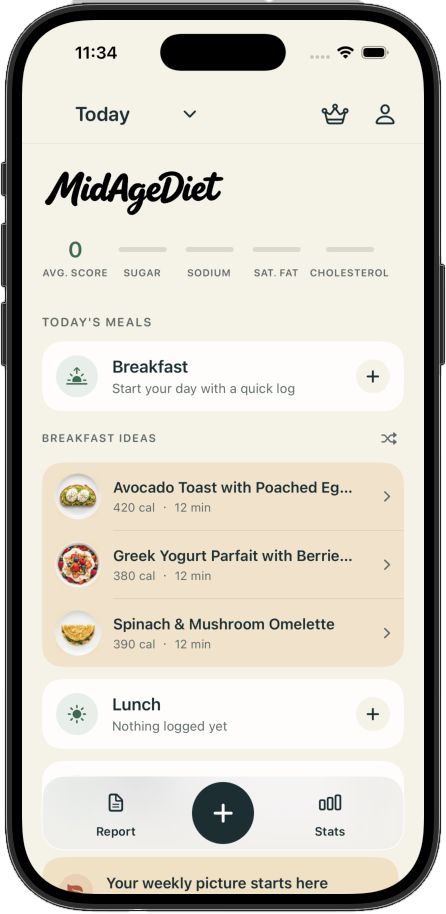
MidAgeDiet is being built to help you notice the everyday signals that matter without turning every meal into another test of discipline.
- Log meals by photo or simple text
- Track four food signals beyond calories
- Spot patterns over days and weeks